A contractor account skips the one-off quote every time a job starts. The same five flat sizes apply to every drop: a 10-yard can holds roughly 4 pickup loads at $595, a 20-yard holds about 8 loads at $695, and a…
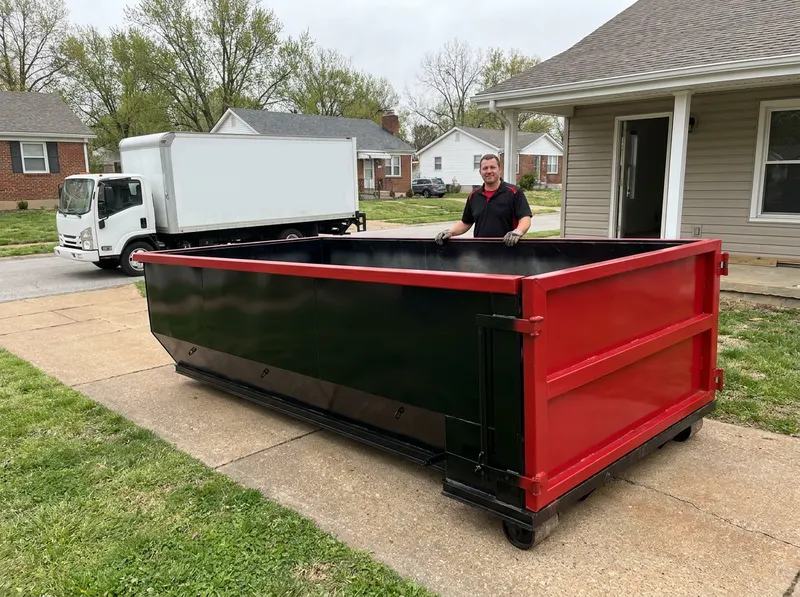
A contractor account skips the one-off quote every time a job starts. The same five flat sizes apply to every drop: a 10-yard can holds roughly 4 pickup loads at $595, a 20-yard holds about 8 loads at $695, and a 40-yard handles a full framing or tear-off haul at $895. The price is the price, no weight ticket at the end, no fuel line item, no surprise on the invoice after the can is already full. That predictability matters when a bid is already locked and margin is thin.
Size selection follows the debris, not the job title. A single-bath gut in a Tower Grove South two-flat fits a 10-yard. A kitchen and floor tear-out in a Shaw or Compton Heights rehab usually needs a 15- or 20-yard. A roof tear-off on a Bevo Mill or Dutchtown bungalow fills a 20- or 30-yard fast because shingles are heavy for their volume. New-build framing scrap and siding on a larger Central West End or Lafayette Square project is where the 40-yard earns its keep. The trade-off is straightforward: a bigger can costs more up front but avoids paying twice for a second haul, while a smaller can preserves driveway and alley space on tight South City lots.
City of St. Louis placement has real constraints crews should plan for. The Hill, Soulard, Benton Park, and Carondelet have narrow streets and residential parking that leave little room for a roll-off truck to swing a can. A dumpster set on a private driveway or job-site lot needs no permit; a can placed in the public right-of-way, a street or alley, requires a City permit, so those drops get scheduled with that lead time in mind. Concrete, brick, and clean fill are accepted as fill-only loads because their weight caps the volume a truck can legally carry. Prohibited items across every account include wet paint, tires, appliances with refrigerant, and hazardous liquids.
A commercial account also fixes the two things that stall a job site: the can filling faster than a crew can haul, and the guessing over what size to order. Instead of a driver making landfill runs, a full can gets swapped for an empty one so the trade keeps moving. Repeat customers get the same flat number every time, which makes it easy to write disposal into a bid before the first swing of a hammer.
Every job gets a firm, written price after a free on-site visit.
Tell us about your contractor & commercial accounts job in St. Louis and we'll send a clear, written quote, usually the same day.
 Silverback Dumpster Rental