The 10-yard is the smallest roll-off in the lineup and suits single-room jobs. A bathroom gut in a Shaw two-story, a kitchen tear-out in a Dutchtown brick flat, or a garage cleanout in Carondelet each fills a 10-yard…
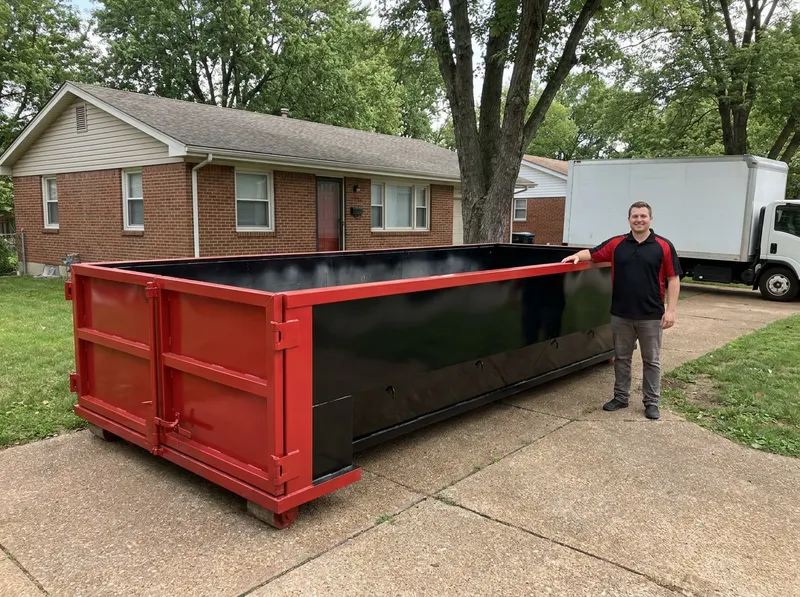
The 10-yard is the smallest roll-off in the lineup and suits single-room jobs. A bathroom gut in a Shaw two-story, a kitchen tear-out in a Dutchtown brick flat, or a garage cleanout in Carondelet each fills a 10-yard without wasting space. As a rule of thumb, one full 10-yard equals about 3 pickup-truck loads to the landfill, the difference is you load once and it leaves once, instead of burning a weekend on the road to the transfer station on Hall Street.
Sizing is the decision that trips most people up. A 10-yard fits a single-room remodel or a heavy, dense load like broken concrete, brick, or dirt, where the weight fills the box long before the volume does. A whole-house cleanout or a roof tear-off needs more air space, that is where the 20-yard ($695) or 30-yard ($795) earns its keep. If the pile is bulky but light, such as furniture, drywall, and cardboard from a Lafayette Square move-out, jumping to a 15-yard ($650) for $55 more buys real breathing room. The trade-off is simple: a smaller box saves driveway space and money; a larger box saves a second haul when the pile grows.
Heavy material is exactly why the 10-yard exists. Roofing shingles, concrete from a patio, and clean fill dirt are dense, and a 10-yard keeps that weight inside a container built to carry it. The flat $595 covers the disposal, so a full box of concrete costs the same $595 as a full box of drywall, no tonnage surprise at the end. That is the piece most local haulers leave in the fine print.
Placement matters on St. Louis's older, narrow streets. On a private driveway in Bevo Mill or The Hill, the roll-off truck sets the container on boards or the driver's own protection to spread the weight and keep the concrete intact. If the only spot is the street, common in Soulard and parts of the Central West End where lots are tight, the City of St. Louis (an independent city, not part of any county) requires a right-of-way permit for a dumpster in the public roadway, and that permit is arranged before drop-off. How it works: 1) call the job and photos, 2) the size and flat price are confirmed on the spot, 3) the container drops on the agreed date, 4) it is picked up at the end of the week or sooner on request. A dumpster rental is not junk removal, the customer loads the box; the crew delivers and hauls it.
Every job gets a firm, written price after a free on-site visit.
Tell us about your 10-yard dumpster job in St. Louis and we'll send a clear, written quote, usually the same day.
 Silverback Dumpster Rental